


2026-08-24 | sandianshui
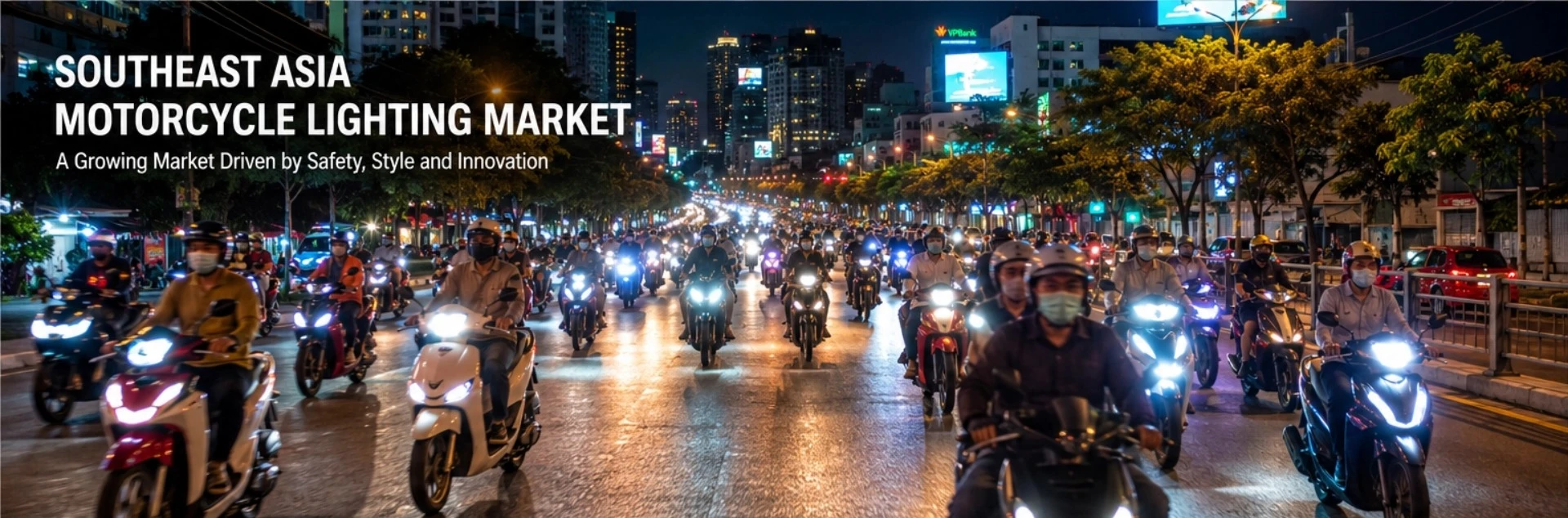
At around 6 p.m., the streets of Hanoi begin to change.
Thousands of motorcycles move through the city, and their headlights gradually turn the evening traffic into a continuous stream of light. For millions of riders across Southeast Asia, motorcycle lighting is not simply an accessory. It is an essential part of daily transportation, visibility, vehicle safety and, increasingly, personal style.
But the motorcycle lighting market in Southeast Asia is changing.
LED technology is becoming more accessible, motorcycle owners are paying greater attention to lighting performance and appearance, governments are strengthening road-safety requirements, and the rapid growth of electric motorcycles is creating new opportunities for lighting manufacturers.
These trends are creating three major forces shaping the future of the Southeast Asia motorcycle lighting market: safety, customization and electrification.
Safety remains the most fundamental reason motorcycle lighting matters.
Southeast Asia has some of the world's highest levels of motorcycle usage. In major cities such as Hanoi, Ho Chi Minh City, Jakarta, Bangkok and Manila, motorcycles and scooters are an important part of everyday transportation.
For riders, visibility can become a serious challenge at night or during heavy rain, fog, dust and other poor-weather conditions.
That is why governments across the region continue to strengthen road-safety requirements for motorcycles and their lighting systems.
Vietnam provides a good example of how regulation can influence motorcycle lighting demand.
Vietnam's Decree 168/2024/ND-CP came into effect on January 1, 2025. Among other road-safety requirements, the regulations require vehicle lights to be used during specified nighttime hours and in conditions where visibility is reduced, such as fog, smoke, dust or rain.
For motorcycle riders, this makes reliable lighting more than a convenience. It is an important part of road safety and legal compliance.
The regulations also introduce penalties for motorcycles with inadequate or non-compliant lighting equipment. For example, Decree 168 provides fines for motorcycles that lack required lights or have lighting equipment that does not meet applicable design requirements. Additional lighting installations can also be subject to penalties depending on how they are installed and whether they comply with regulations.
Vietnam has also updated its technical framework for vehicle headlamps. Circular 07/2024/TT-BGTVT introduced QCVN 35:2024/BGTVT, a national technical regulation covering road-vehicle headlamps, including motorcycle headlamps. The regulation took effect on October 1, 2024.
This regulatory environment creates an important market trend:
Motorcycle lighting is gradually moving from a simple replacement part toward a safety-critical vehicle component.
For manufacturers and aftermarket brands, this means product development should focus not only on brightness, but also on beam pattern, visibility, durability, thermal management, weather resistance and regulatory compatibility.
As consumers become more familiar with LED technology, several features are becoming increasingly important:
This creates opportunities for manufacturers that can combine performance, reliability and compliance rather than competing only on price.
Safety explains why riders need motorcycle lights.
Customization explains why many riders are willing to spend more on them.
For younger motorcycle owners, especially those interested in modified motorcycles, scooters and street-style builds, lighting has become an important part of the vehicle's overall appearance.
A motorcycle's headlight is one of the first things people notice.
Changing the lighting system can completely alter the visual character of a motorcycle.
Traditional motorcycle headlights were primarily designed to illuminate the road.
Modern LED lighting can do much more.
Different lens designs, light signatures, daytime running lights, auxiliary lights and accent lighting can create completely different visual identities.
Popular customization directions include:
This trend is particularly relevant to Southeast Asia because motorcycles are deeply integrated into urban culture.
For many riders, modifying a motorcycle is not simply about improving performance. It is also about creating something that looks different from the thousands of other motorcycles on the road.
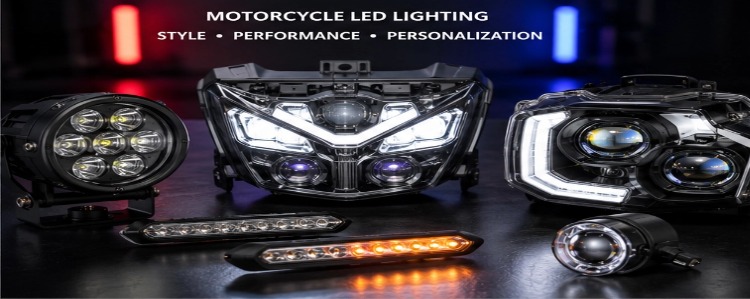
One of the biggest advantages of motorcycle lighting is the relatively low barrier to customization.
A rider does not necessarily need to rebuild an entire motorcycle to create a noticeable visual upgrade.
Replacing a stock headlight, adding auxiliary lighting or installing a different turn-signal system can dramatically change the appearance of a motorcycle.
That makes lighting attractive to both professional motorcycle workshops and individual consumers.
For aftermarket brands, this creates an opportunity to position LED lighting products around three benefits:
Better visibility + better appearance + easier installation.
However, customization has an important limitation: not every lighting modification is legal.
The growing demand for motorcycle modifications does not mean that every lighting product can be installed freely.
Vietnam's Decree 168 provides penalties for certain unauthorized or non-compliant lighting modifications. For example, installing additional lights in prohibited configurations can result in fines, while unauthorized changes to a motorcycle's lighting system may also fall under broader vehicle-modification rules.
This creates an important distinction for motorcycle lighting brands:
A good motorcycle headlight is not simply the brightest possible light.Learn more about [how to choose the right motorcycle LED headlight] in our motorcycle lighting guide.
Excessive glare can reduce visibility for other road users and create safety problems.
A well-designed motorcycle headlight should provide:
For aftermarket manufacturers, this is an important product-development principle.
The future of motorcycle lighting is not about maximum brightness. It is about usable light.
LED technology has fundamentally changed motorcycle lighting.
Compared with traditional halogen systems, LED lights can provide manufacturers with greater flexibility in designing compact, efficient and visually distinctive lighting systems.
LED technology is particularly well suited to motorcycles because motorcycles have limited space and relatively demanding electrical and environmental conditions.
Modern LED motorcycle lights can be designed to provide:
This is one reason LED has become increasingly common in both original equipment and aftermarket motorcycle lighting.
The shift is especially important in Southeast Asia, where motorcycles and scooters are widely used for commuting, delivery services and everyday transportation.
If safety represents today's demand and customization represents today's consumer trend, electrification could define the next stage of the market.
Electric motorcycles and scooters are expanding across Southeast Asia, with Vietnam becoming one of the most closely watched markets.
The growth of electric two-wheelers is creating new opportunities throughout the supply chain, including batteries, motors, controllers, displays, charging systems and lighting.
Electric motorcycles place greater emphasis on energy efficiency.
Every electrical component contributes to the vehicle's overall energy consumption. As a result, efficient LED lighting is a natural fit for electric two-wheelers.
At the same time, electric motorcycle manufacturers have greater freedom to integrate lighting into the vehicle's design.
Instead of treating the headlight as a separate component, manufacturers can integrate lighting into:
This opens the door to more integrated and visually distinctive lighting designs.
Vietnam's electric two-wheeler market has grown rapidly.
VinFast reported that it sold approximately 406,500 electric two-wheelers in Vietnam in 2025, with its Evo models accounting for more than 250,000 units. The company also expanded its charging and service infrastructure across the country.
This growth indicates that electrification is no longer a niche trend in Vietnam.
For motorcycle lighting manufacturers, it means a new customer base is emerging.
The opportunity is no longer limited to replacement headlights for gasoline motorcycles. Suppliers can increasingly target:
OEM lighting + aftermarket LED upgrades + electric scooter lighting + integrated lighting systems.
The Southeast Asian motorcycle lighting market is becoming more competitive.
Low-cost products are widely available, making price competition increasingly difficult to avoid.
But competing only on price is unlikely to create a sustainable advantage.
Instead, manufacturers should focus on several areas.
Products need to withstand the real conditions of Southeast Asian roads.
High temperatures, heavy rainfall, humidity, dust and constant vibration place significant demands on motorcycle lighting systems.
Water resistance, sealing, thermal management and vibration durability should therefore be core product-development priorities.
A motorcycle light that is difficult to install creates additional costs for both consumers and workshops.
Plug-and-play designs, model-specific mounting solutions and clear installation instructions can significantly improve the customer experience.
Consumers increasingly understand the difference between simply having a bright light and having a well-designed lighting system.
Manufacturers should focus on beam distribution, optical design, cutoff performance and usable illumination.
Appearance matters.
A technically excellent product that looks outdated may struggle in the aftermarket.
Modern motorcycle lighting products should combine engineering with contemporary styling.
Black housings, compact projector designs, distinctive LED signatures and integrated DRL elements can help brands differentiate their products.
As Southeast Asian governments continue to strengthen road-safety standards, regulatory compliance will become an increasingly important competitive advantage.
Manufacturers entering Vietnam and other ASEAN markets should research local requirements before launching products rather than assuming that a product legal in one country will automatically be legal in another.
The region should not be viewed as one single motorcycle market.
Each country has different motorcycle ownership patterns, regulations, consumer preferences and levels of aftermarket development.
However, several markets deserve particular attention.
Vietnam combines a very large motorcycle user base with a rapidly developing electric two-wheeler market.
The combination of road-safety regulation, motorcycle customization and electrification makes Vietnam one of the most interesting markets for motorcycle lighting brands.
Indonesia has one of the world's largest motorcycle markets and a strong motorcycle modification culture.
Its large domestic market makes it attractive for both OEM suppliers and aftermarket lighting brands.
Thailand has a mature motorcycle industry and an established automotive manufacturing ecosystem.
This makes it particularly interesting for suppliers looking beyond simple aftermarket sales and toward OEM and industrial opportunities.
The Philippines has strong motorcycle and scooter demand, particularly for commuting and delivery applications.
Practical lighting solutions, auxiliary lights and durable products can have strong potential in this environment.
Looking ahead, three trends are likely to shape the industry.
Consumers and regulators will increasingly focus on lighting quality rather than simply brightness.
Beam control, visibility, durability and compliance will become more important.
Motorcycles will continue to become platforms for personal expression.
Distinctive LED signatures, projector headlights, auxiliary lighting and customized lighting designs will remain attractive to younger riders.
As electric motorcycles become more common, lighting will become more deeply integrated into vehicle design.
Instead of simply replacing a conventional bulb or headlight, future lighting systems will increasingly become part of the motorcycle's overall electronic and visual architecture.
The motorcycle lighting industry in Southeast Asia is entering a new stage.
The traditional motorcycle headlight had one primary purpose: illuminate the road.
The modern motorcycle lighting system has several jobs.
It needs to improve visibility.
It needs to support road safety.
It needs to survive challenging environmental conditions.
It needs to complement the motorcycle's design.
And increasingly, it needs to integrate with electric vehicle architecture.
That is why the future of motorcycle lighting is not simply about producing brighter LEDs.
It is about developing safer, smarter, more efficient and better-designed lighting systems.
For manufacturers, distributors and aftermarket brands, this creates a market with multiple layers of opportunity.
The companies that understand the balance between safety, customization, technology and local regulations will be better positioned to compete as Southeast Asia's motorcycle industry continues to evolve.
Yes. Demand is being supported by the region's large motorcycle population, growing interest in LED upgrades, motorcycle customization and the expansion of electric two-wheelers.
However, growth varies significantly by country, so manufacturers should evaluate individual markets rather than treating Southeast Asia as a single market.
LED headlights offer manufacturers greater flexibility in terms of size, efficiency, styling and optical design. They are also well suited to modern motorcycles and electric scooters.
Yes. Vietnam has regulations covering motorcycle lighting and road-traffic safety. Decree 168/2024/ND-CP, effective January 1, 2025, introduced updated traffic-violation penalties, while QCVN 35:2024/BGTVT establishes technical requirements for road-vehicle headlamps.
It depends on the product, installation method and applicable regulations. Some lighting modifications may be subject to penalties if they do not comply with vehicle design or regulatory requirements. Riders should verify local requirements before installing additional or modified lighting systems.
Yes. The growth of electric two-wheelers creates opportunities for energy-efficient LED headlights, integrated daytime running lights, turn signals and other electronic lighting systems. Vietnam's rapid growth in electric two-wheelers illustrates the scale of this emerging opportunity.
The Southeast Asian motorcycle lighting market is being shaped by three powerful forces: safety, personalization and electrification.
Safety regulations are raising the standards for lighting performance.
Consumers are turning motorcycle lights into an important part of vehicle customization.
And electric motorcycles are creating demand for more efficient and integrated lighting technologies.
For the motorcycle lighting industry, the message is clear:
The next generation of motorcycle lighting will not simply be brighter. It will be smarter, safer, more efficient and more personalized.